Most oral-health supplements are sold on claims no published research supports: regrown gums, whitened teeth, reversed gum disease. A few ingredients do have genuine controlled-trial evidence, and they do a narrower job than the marketing suggests. They reduce gum bleeding and inflammation, reduce plaque, and reduce bad breath. This guide ranks what the evidence actually supports, in the order you should try it, starting with the parts that cost nothing.
Step 1: The things that beat every supplement
This is not filler advice. It is what the trials themselves did. In every study where a supplement improved gum outcomes, it was added to normal hygiene and professional cleaning. None replaced them, and none was tested against them.
- Brush twice daily with a soft brush and light pressure. Hard scrubbing is a leading cause of gum recession, so brushing harder actively works against you.
- Clean between the teeth daily. This is where gum inflammation starts, and a brush does not reach it.
- Keep professional cleanings. Scaling removes what home care cannot.
- Brush or scrape your tongue if bad breath is the problem. In a randomized trial, tongue brushing performed comparably to a probiotic, and the two together beat either alone (PMID 41604763).
- Stop smoking. It is among the strongest risk factors for periodontal attachment loss.
Step 2: The ingredients with real trial evidence
| Ingredient | Evidence grade | Best for | What to know |
|---|---|---|---|
| Lactobacillus reuteri | MODERATE | Bleeding gums, gingivitis | Cut bleeding sites substantially over two weeks (PMID 18985460). Improved bleeding and pocket depth alongside cleaning (PMID 21523225, 22694350). Less inflammation at 1 billion CFU/day over 8 weeks (PMID 41026095) |
| S. salivarius K12 | MODERATE (breath only) | Bad breath | Reduced volatile sulphur compounds in randomized trials (PMID 41604763, 16553730, 39625350). Best combined with tongue brushing |
| S. salivarius M18 | MODERATE | Plaque, bleeding gums | Reduced bleeding and plaque over three months in 62 people, but the benefit reversed after a one-month washout (PMID 39057009) |
| Bifidobacterium lactis HN019 | SOME | Gingivitis, as an adjunct | A different strain from the BL-04 that appears in many oral products |
| Vitamin C | ESTABLISHED (deficiency only) | Bleeding gums caused by deficiency | Corrects a real cause if you're deficient. No good evidence that extra helps if you're not |
| Vitamin D | LIMITED for gums specifically | General bone and immune function | Worth correcting a documented deficiency, but not a gum treatment on its own |
| L. paracasei ET-22 | LIMITED | Mice and test tubes only, with no human trial of this strain (PMID 37571254) | |
| B. lactis BL-04 | LIMITED (wrong target) | Respiratory strain that missed its primary endpoint in its main trial (PMID 34927036). Common padding in oral formulas |
Match the ingredient to your actual problem
- Gums bleed when you brush: L. reuteri or S. salivarius M18, alongside better cleaning. Bleeding is reversible at this stage, which is exactly why it's worth acting on.
- Persistent bad breath: S. salivarius K12, plus a tongue scraper. If breath problems persist, see a dentist, because the cause is often a tooth or gum issue and not the tongue.
- Plaque building up quickly: M18 has the most direct plaque data, but this is mostly a mechanical problem, so technique and cleanings matter more.
- Gums already receding: no supplement addresses this. Receded tissue does not grow back, so see a periodontist about whether coverage surgery is warranted.
Step 3: If you want a combined formula
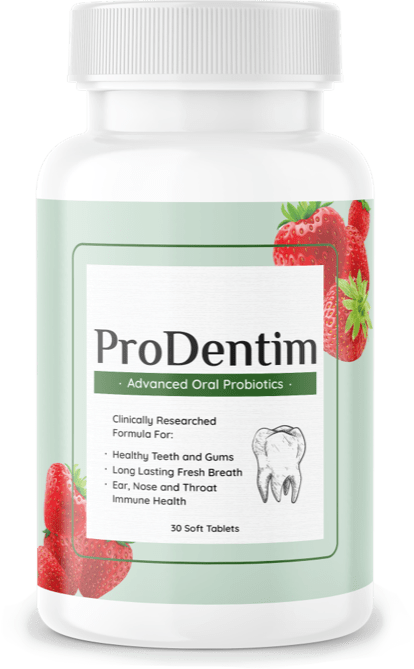
Some people would rather take one product than assemble single strains. If you go that route, the checklist is short. It should contain at least one strain with real evidence (reuteri, M18, or K12 for breath), it should publish per-strain doses instead of one combined CFU figure hidden in a proprietary blend, and it should carry a real money-back guarantee. We applied exactly that checklist to the most-searched product in this category in our evidence-based ProDentim review, including a strain-by-strain evidence table and the places its marketing runs past its research.
Claims that should make you close the tab
- "Regrows or rebuilds your gums." Receded tissue does not come back from any supplement.
- "Reverses gum disease." Periodontitis needs professional treatment, and supplements were adjuncts in every trial.
- "Whitens teeth naturally." No published support from these ingredients.
- "Clinically proven formula" attached to a proprietary blend with no per-strain doses. The strains may have studies; the product almost certainly does not.
- Any page with a perfect score and no criticisms. That is marketing, not a review.
Realistic expectations
Give anything in this category four to eight weeks before judging it. The trials measured over weeks to months, not days. Expect a modest improvement in bleeding or breath instead of a transformation, and expect it to depend on continued use: when the M18 trial included a washout period, the benefit disappeared. That is a fair, unglamorous summary of what oral supplements can do, and it is considerably more than most product pages will tell you.
Frequently Asked Questions
What is the best supplement for gum health?
For bleeding gums, the best-evidenced options are Lactobacillus reuteri and Streptococcus salivarius M18. Both have placebo-controlled trials showing reduced bleeding and plaque. No supplement outperforms the basics, though: brushing, flossing, and professional cleaning came first in every trial that found a benefit.
What actually helps bad breath?
S. salivarius K12 has randomized-trial support for reducing the volatile sulphur compounds that cause oral malodour (PMID 41604763, 16553730). The strongest result came from combining it with tongue brushing, so do the free thing too.
Does vitamin C or vitamin D help gums?
If you're deficient, correcting that matters. Vitamin C deficiency causes bleeding gums, and vitamin D is involved in bone and immune function. If you're not deficient, there is no good evidence that extra amounts improve gum health. Test before supplementing instead of guessing.
Can supplements replace going to the dentist?
No. Every trial in this category used supplements alongside professional care. Tooth pain, swelling, an abscess, or persistent bleeding all need a dentist. Those are diagnoses, not deficiencies.
Are oral probiotics safe?
They're generally well tolerated in healthy adults. The main caution is for immunocompromised people: anyone on chemotherapy, post-transplant, or with a heart-valve condition should check with a doctor before any live-probiotic product.